Product Design Top Tips

The recent success of BlackBerry’s BB10 line, with devices flaunting a revolutionary design face-lift, highlights the importance of good product design. It seems the fresher, sleeker-looking handsets have also played a great part in the firm’s rise in share price; from $6.31 in September to today’s comparatively lofty price-tag of $13.20; showing how good design can yield a great return on investment.

The cumbersome shape of older generation handsets has often prevented the company from competing with the forward-thinking designs of competitors; however, Blackberry appears to have learned from past mistakes and created a line of devices that is set to shake up the mobile hierarchy.

This success, combined with the launch of Samsung’s Galaxy S4, has yet again turned the spotlight on product design as a whole, focusing on its importance and the effect it can have on the success of a product.

Drawing on past experiences – good and bad – 4D Products, have compiled 10 product design top tips for trailblazing product design;

1 – Research existing products and existing solutions

It is rare to work on a project where there are no alternative solutions on the market. If you can identify an area where current products are Read the rest of this entry »

New Product, Great New Video

We are very excited to see the Football Flick URBAN product used brilliantly by World champion freestyle footballer, John Farnworth. Exciting times for our client, iControl Sports Distribution.

Football Flick Urban with World Champion John Farnworth from footballflick on Vimeo.

Secure payments in the home

4D were delighted to attend the official office launch of Secure Electrans offices in Ellesmere Port.

Electronic Enclosure

It was great to see the HomePay product demos, here’s what it does…

“Secure Electrans’ HomePay is a concept which is revolutionary in its simplicity – a device that allows safe, secure EMV Chip & PIN transactions at home”

(http://www.electrans.com)

Where do new ideas come from?

A lot of time, effort, and expense goes into developing new products, but where do new ideas come from?

When we begin a new project we organise short, focused idea generation sessions, which go something like;

  • Assemble a team of creative people – they dont all need to be experts in the field.
  • Brief the team on the new project, what are we trying to achieve? What design challenges need to be overcome? Where can we challenge pre-conceptions of what this product needs to be? Where can we innovate?
  • Look at individual aspects in isolation, how can we solve this? How would the user benefit?
  • Fill a wall with very quick sketched ideas on Post-it notes.
  • Dont get bogged down in detail or reasons not to do something, be open to ideas at this point.
  • Spend time in group discussion, and time individually exploring ideas without distraction.
  • Start to assess the ideas available. Look at groups of solutions and consider how they could work together as a whole.

If you involve a range of people at the idea generation stage, the product opportunity is more widely explored, and the design team has confidence that they have a comprehensive range of solutions to work with during the development process.

This is undertaken as a standard part of the concept generation activity at 4D Products, and we believe our clients really benefit from a broad perspective and good range of solutions to any given challenge


Product Design Awards

Why not visit http://awards.designweek.co.uk/dw/2012/entry-showcase-13.html to see one of our recent project in the Design Week product design awards show case. Fingers crossed for a good results!

Product_design_awards


Anyone for Raspberry Pi?

An intriguing concept intended to increase interest in computer programming from an early age.

Designed in the UK, The Raspberry Pi is a credit-card sized computer board that plugs into a TV and a keyboard. It’s a miniature ARM-based PC which can be used for many of the things that a desktop PC does, like spreadsheets, word-processing and games. It also plays High-Definition video and costs only £21.60!

The theory goes that programming knowledge has declined since the good old days of BBCs, Sinclair Spectrums, and Commodore 64s, when kids could experiment by writing programs for their home computers. Students entering computer based university courses now have more experience using spreadsheets and writing web pages due to school curriculum’s. Not much use when you want to create something new from scratch.

What could winning Product Design awards do for your business?

There are many Product Design Awards over the calendar year, and most other industries will have their share of awards too. Have you ever entered one of your products in a competition?

We recently entered a new hand held electronic device into the Design Week Awards 2012.

Why? Well we don’t have particularly large egos, but is always nice if the work you do gets recognition. But the real opportunity is one of marketing. The very fact we have entered the awards gives us something positive to talk about, and suggests we are delivering high quality work worthy of consideration in a national competition. Imagine if we were to win! The product, the company who own it, and our design capabilities will receive national press for all the right reasons.

Any business can talk about their own merits, USPs, etc, but it will always carry more weight if the positive words come from an unbiased third party with industry knowledge.

When you look at your product range, do you feel it’s worthy of competing for an award against others in your sector? If not, perhaps its time for change.

The MD of a medical diagnostics business once told us he wanted his products “to be the Apple Computers of our industry”. We are certainly up for a challenge, and that particular project recently won first place in a plastics design industry competition. Great PR for the client, their product, and the design team.

Mountain Bike Video Cameras

I got out on my Marin mountain bike for the first time this year recently. It was a sunny Sunday afternoon, which had brought plenty of other cyclists out.

As a product designer, I like keep an eye on what gadgets and accessories cyclists have with them.

One thing that is becoming more common are helmet mounted video cameras. This isn’t surprising considering peoples interest in posting a record of any and all their activities on Youtube or Facebook. Considering most people now carry smart phones too, I am surprised I cant find any products which connect a camera to the smart phone and make use of its screen for playback, its internal memory for storage, and its internet connectivity for uploading content to social media sites before the ride is even finished.

Anyone out there know of such a device / system?

Of course with our design expertise, we may just build something ourselves to do the job…Watch this space.

Virtual Engineering

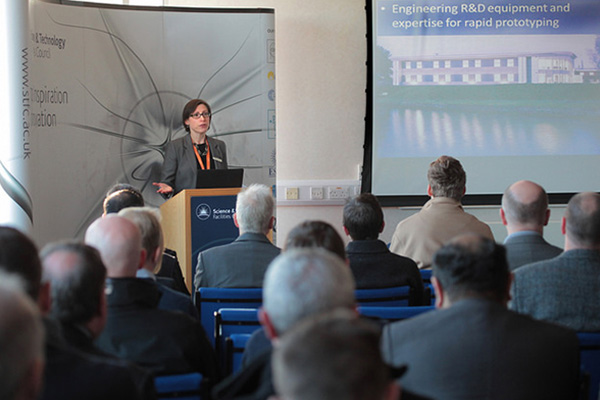
We attended a very interesting event organised by the Virtual Engineering Centre at Darsbury Science and Innovation Campus.

Cutting edge virtual engineering and simulation facilities are available to support our design team, which we can utilise on our clients projects to solve complex engineering issues at no additional cost.

5 things to avoid when designing a new product…

‘I don’t need to do much research’

You could go on researching forever, and at some point you need to take action to move your project forward or put a line through it and move onto the next thing. But as a minimum you should be satisfied that there is a real market need for your product. What do total strangers think? How is the problem currently solved? How many people are experiencing the problem? Is my idea better or cheaper or faster than current solutions? How would I pitch this idea as really useful to a potential user in just a few sentences?

‘I need to file a patent right away’

We would advise people to explore the best method of protecting their product idea in parallel to discussing it with a professional designer under confidentiality. If they are good they will challenge your ideas, improve on them, and bring exciting new ideas to the table which can add commercial value to the product. When you have the best solution to the problem, you can protect it in the most suitable way. Patents, design rights, registered designs, registered trade names / logos and copyright are all to be considered. If you do this without optimising the design, you risk protecting an idea that isn’t as good as it might be, and allowing competitors to easily improve on your offering.

‘I know what I want, I don’t need to pay for professional designers’

As previously mentioned, a good designer should pay for themselves many times over when the product goes to market. How so? By optimising the product, reducing its build and set-up costs, making it more attractive to the end user, and therefore securing more sales.

‘I don’t need to spend money on prototyping’

Too often people see prototyping as an expense that they would prefer to avoid. In reality it is the best opportunity you will get to learn about, and improve your product prior to costly manufacturing set up and production runs.

A good designer will present a range of prototyping options which are most suitable to you at the time. Don’t spend thousands on vacuum castings just to see how big something looks on the desk, you can find that out with a block model made from foam board.

‘My product will be great, it will sell itself!’

People have lots of choice and limited budgets. They also tend towards the familiar, buying things that have suited their purposes previously. In order to sell your new product, you need to get it in front of potential buyers and very quickly communicate why they should choose your product over someone else’s. This often comes down to clearly demonstrated benefits to a business or end user, and an acceptable price.

An e-commerce website can be great, but how are you going to drive traffic to it?

Whatever route you choose, you will need to get the marketing message right, and make the buying process as hassle and risk free as possible.

If you aren’t a seasoned sales person, should someone else be doing it? You might want to consider selling or licensing your idea to an existing business with established routes to market.

Get in touch with 4D Products if you want success in New Product Development.